
Easy, wrist-friendly stretches for the 4th trimester, plus how to join us at Mums & Bubs Yoga in Ashgrove
Welcome to the 4th trimester, mama! These precious early months with your new baby are a time of deep connection, wonder and change, and many of us are surprised by just how much they ask of our bodies and hearts.
One gentle reminder your body might send you is wrist pain. All the loving ways we care for our little ones (lifting, cradling, rocking and feeding, often in the soft quiet of the night) ask our hands and wrists to bend and hold for hours each day. It's completely normal, you're not alone, and with a little gentle movement and nurturing self-care, you can feel more comfortable and at ease in your body again.
The most common culprit is De Quervain's tenosynovitis, often nicknamed "mummy thumb" or "baby wrist." It's an irritation of the tendons on the thumb side of the wrist, and it tends to flare when you grip, make a fist, or turn your wrist. The classic trigger is the "scoop": lifting your baby from under the arms with your thumbs pointing up.
Wrist pain rarely lives in the wrists alone. When we spend our days curled around a baby, we slip into a sunken chest and a forward-jutting "chicken neck." That posture can lead to neck stiffness, discomfort in the shoulders, and extra strain travelling down the arms into the wrists.
Check out these four poses to help open the chest, reset the neck and shoulders, and give your wrists a break. None of them asks you to bear weight on your hands, and all of them can be done on the floor beside your baby.
1. Supported Heart Opener (Supported Fish)
Why it helps: This is the antidote to the feeding hunch. It gently opens the front of the chest and shoulders, letting the upper back release without any load on the wrists.
How to do it:
Place a rolled towel, folded blanket or pillow lengthways along your spine, starting just below your shoulder blades.
Lie back over it with a second pillow under your head so your neck stays long and comfortable.
Let your arms rest out to the sides, palms facing up, elbows soft.
Close your eyes and breathe into your ribs for 1 to 3 minutes.
Tip: Your baby can lie on your tummy or beside you for this one, which makes it a lovely moment of connection.
2. Seated Cat–Cow
Why it helps: Moving the spine through flexion and extension eases stiffness through the upper back and neck, and keeping your hands on your thighs takes the pressure off your wrists entirely.
How to do it:
Sit cross-legged on the floor or towards the front of a chair, with your hands resting lightly on your knees or thighs.
Inhale (Cow): draw your chest forward and up, roll your shoulders back, and lift your gaze slightly.
Exhale (Cat): round your spine, draw your navel in, and let your chin drop gently towards your chest.
Flow slowly with your breath for 6 to 10 rounds.
Tip: Keep your hands relaxed rather than gripping your knees. Let the movement come from your spine.
3. Forearm Puppy Pose
Why it helps: Puppy pose lengthens the spine and opens the shoulders and armpits, the areas that tighten from carrying and feeding. Resting on your forearms instead of your palms keeps the wrists completely free.
How to do it:
Come onto your hands and knees, then lower down onto your forearms, elbows under your shoulders.
Walk your forearms forward a little, keeping your hips stacked over your knees.
Let your chest melt towards the floor and rest your forehead on the mat or a folded towel.
Stay for 5 to 8 slow breaths, then walk your arms back in.
Tip: If your knees are tender, pop a folded blanket underneath them.
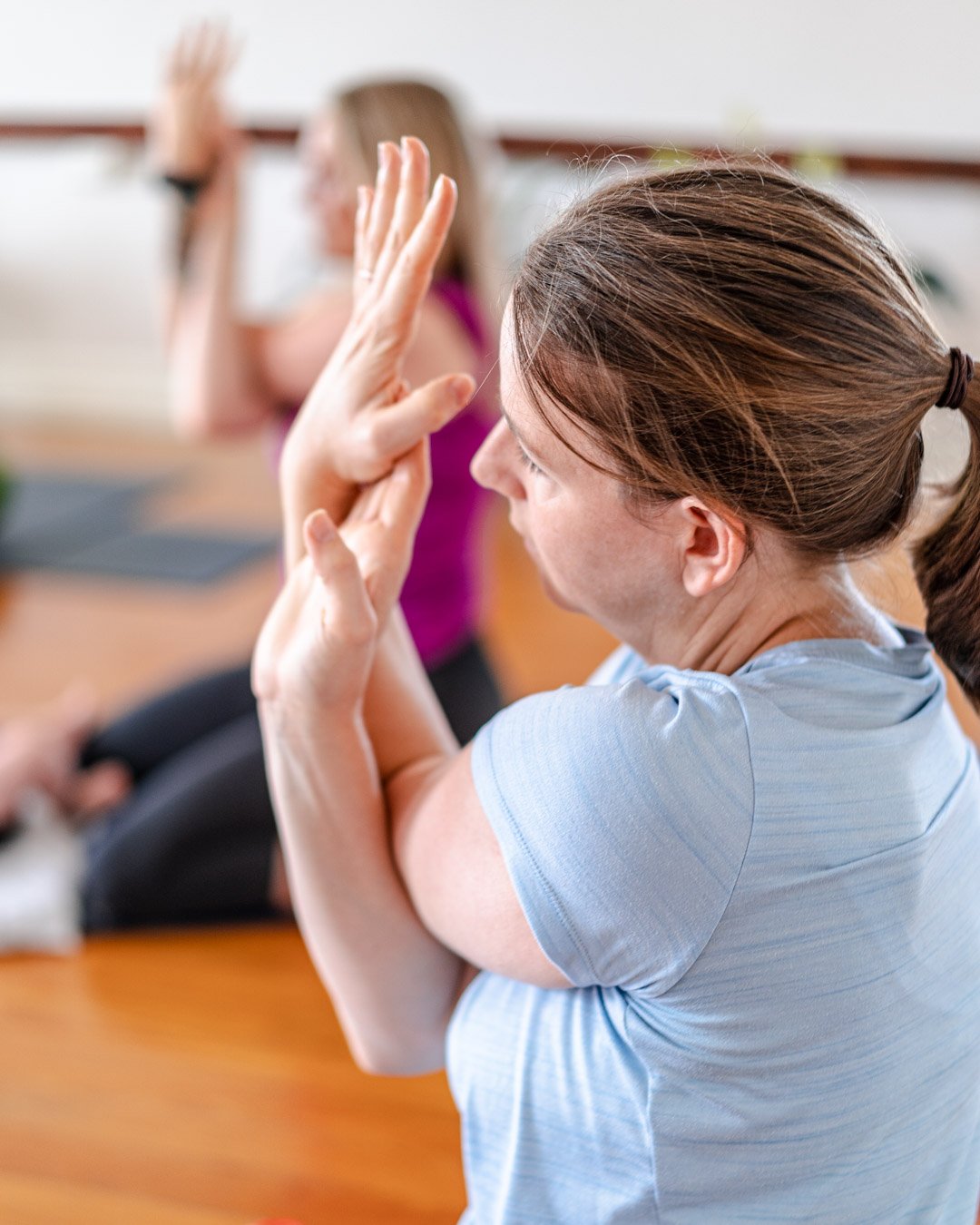
4. Eagle Arms with Chin Tucks
Why it helps: Eagle arms stretch the upper back and the space between the shoulder blades, while chin tucks gently retrain that "chicken neck" back over your shoulders.
How to do it:
Sit tall. Cross your right arm under your left at the elbows and bring the backs of your hands (or palms) towards each other. If that's too much, simply hug your opposite shoulders.
Lift your elbows to shoulder height and draw them gently forward, feeling the stretch between your shoulder blades.
Now draw your chin straight back, as if making a double chin, keeping your gaze level. Hold for a breath, then release.
Repeat the chin tuck 5 times, then switch your arm cross and repeat.
Tip: Keep your wrists soft and neutral. If wrapping your hands aggravates your thumb, stay with the shoulder hug.
Everyday Habits to Protect Your Wrists
Yoga helps most when it's paired with small changes to how you hold and handle your baby:
Lift with your forearms, not your thumbs. Slide your hands and forearms under your baby rather than scooping from under their arms with thumbs pointing up.
Keep your wrist straight. Try to keep your forearm, wrist and hand in one line instead of bending your wrist to cradle your baby's head.
Support feeds with pillows. Once your baby is latched or settled with a bottle, use a pillow or rolled blanket to support their head so your wrist isn't holding a bent position for the whole feed.
Share the load. Use both arms, swap sides often, and try a baby carrier for longer stretches of holding.
Move gently. Rest from aggravating tasks, but don't stop moving altogether. Gentle movement helps blood flow to the area.
If your pain is sharp, getting worse, causing swelling, or not improving after a couple of weeks, check in with your GP, physiotherapist or hand therapist. Early support makes a big difference.
Join Us at Mums & Bubs Yoga in Ashgrove
Want to practise these poses with guidance (and your baby right beside you)? Join us for Mums & Bubs Yoga on Fridays in Ashgrove.
Our classes combine gentle postnatal yoga to help you rebuild strength, flexibility and relaxation, with the Yogababy program of bonding activities, singing and time to connect with other mums. Classes are suited to babies from 8 weeks old until they start crawling, and mats and equipment are provided, so just bring a rug for your baby, water and your change bag.
Classes run as a course over several weeks, so you and your baby can settle in and build your practice together.