
A simple Yoga Posture can make all the difference to prepare your body for birth
Create space in the hips, lengthen the psoas, and prepare your body for birth.
Low Lunge (Anjaneyasana) is one of the most supportive poses for pregnancy. It gently opens the front of the hips, releases tension through the pelvic area, and lengthens the psoas — one of the most influential muscles in the body during pregnancy and birth.
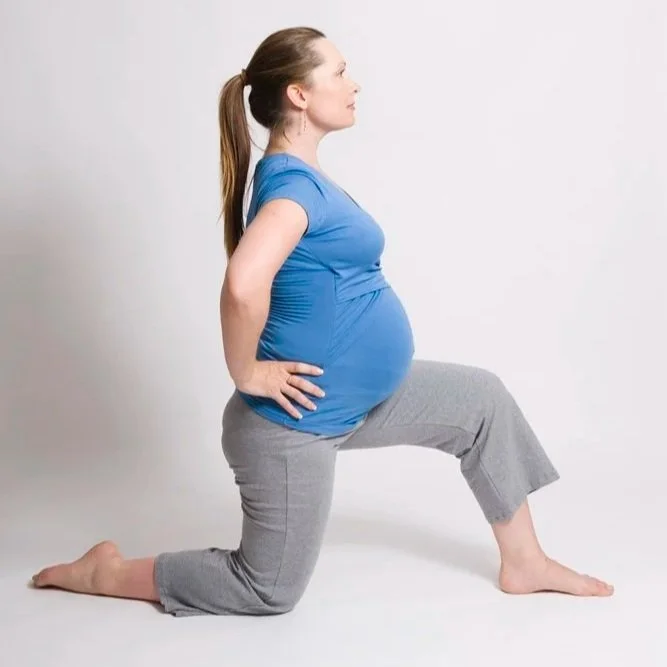
When the psoas is balanced and spacious, it creates more room for baby to descend into the pelvis. It can also help relieve the low back discomfort many pregnant people experience, as the psoas attaches along the lumbar spine and can tug on the lower back when tight.
At Yogababy, we teach a simple and safe setup for Anjaneyasana that works beautifully throughout pregnancy, whether you're new to yoga or deepening your regular practice.
Why the Psoas Matters in Pregnancy
The psoas plays a key role in posture, pelvic alignment and mobility — all essential in labour.
A released, responsive psoas can help:
Create more space in the pelvic inlet
Encourage optimal fetal positioning
Ease lower-back tightness and pulling sensations
Support a more grounded, aligned pelvis for birth
Because the psoas subtly influences the shape of the pelvis, working with it mindfully gives your baby the best opportunity to find their way into a favourable position.
A Simple Pregnancy-Safe Setup for Anjaneyasana
Here’s an accessible way to practice Low Lunge with both stability and ease:
Start on hands and knees with plenty of padding under your knees.
Step your right foot forward between your hands, stacking your knee over your ankle.
Slide your left knee back until you feel a light stretch through the front of your left hip.
Use blocks under your hands if needed to lift the floor to you and keep the spine long.
Then — the key tip — gently tuck the tailbone under and lift the pubic bone upwards.
This subtle pelvic tilt switches the stretch into the true psoas line.
It protects the lumbar spine from over-arching.
And it creates the balanced, lengthened space that supports your birth preparation.
Keep the chest open, shoulders soft, and your breath steady.
Stay for 5–10 breaths, then switch sides.
Why the Tailbone Tuck Matters
In pregnancy, it’s common to lean forward into a lunge and miss the psoas entirely.
By tucking the tailbone and lifting the pubic bone, you:
Activate the lower abdominals
Protect the lower back from compression
Deepen the stretch safely
Stabilise the pelvis
Encourage better fetal positioning by creating space at the front of the hips
This small alignment shift makes a big difference in your labour prep.
Bring It Into Your Everyday Practice
Even a few mindful lunges each week can shift how your hips feel, how you stand, and how baby sits in your pelvis. Many Yogababy students notice improved comfort, less back tension, and a greater sense of spaciousness after adding this practice to their prenatal yoga routine.